
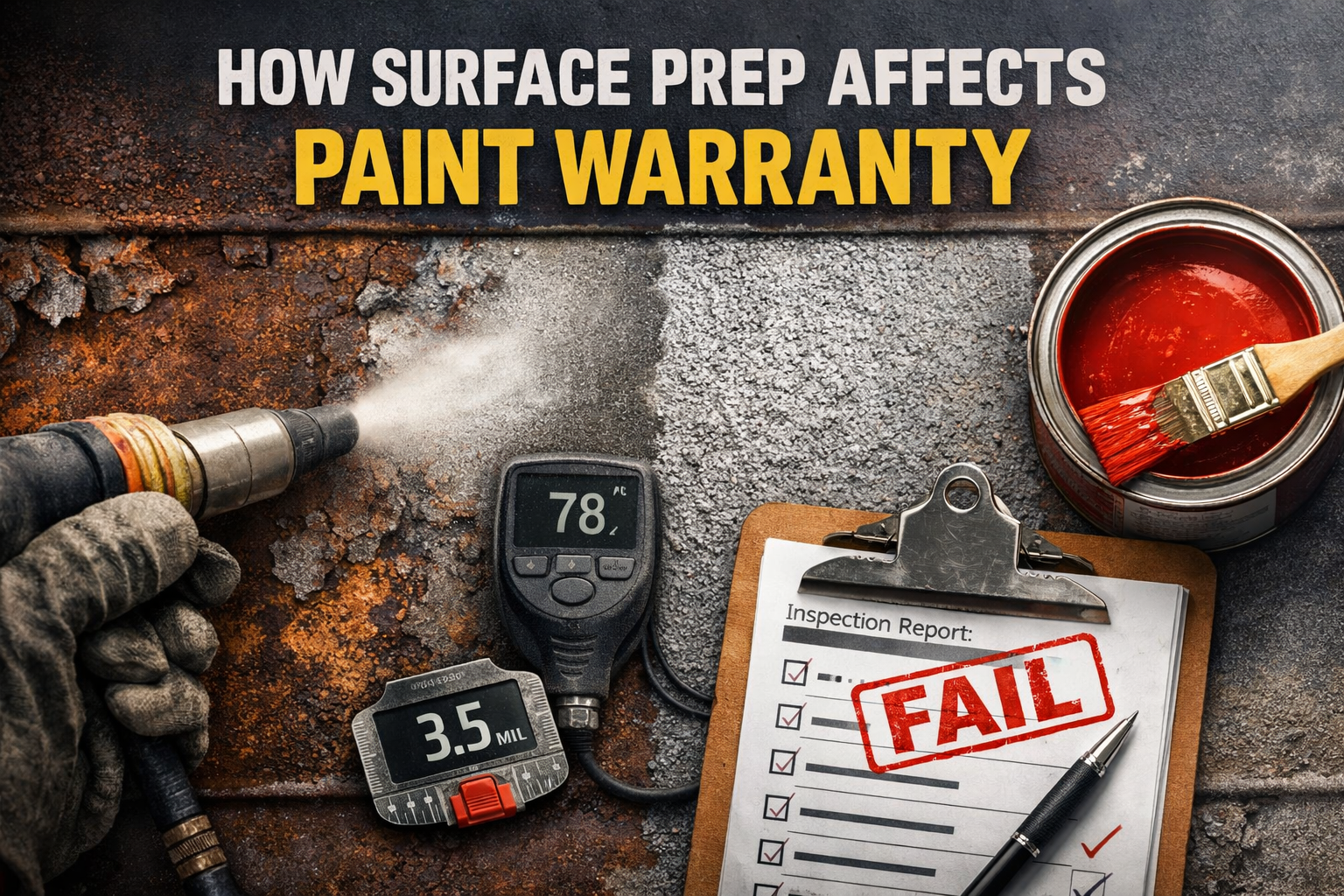
How Surface Prep Affects Paint Warranty
Surface preparation determines whether a paint warranty holds or quietly disappears. Learn how prep standards, inspection criteria, and timing affect whether coatings are covered or denied.
Why OSHA, EPA, and Silica Rules Matter to You
Regulations in blasting exist because real damage happens when dust, waste, and exposure aren’t controlled. Learn why OSHA, EPA, and silica rules affect job safety, project costs, and long-term liability.
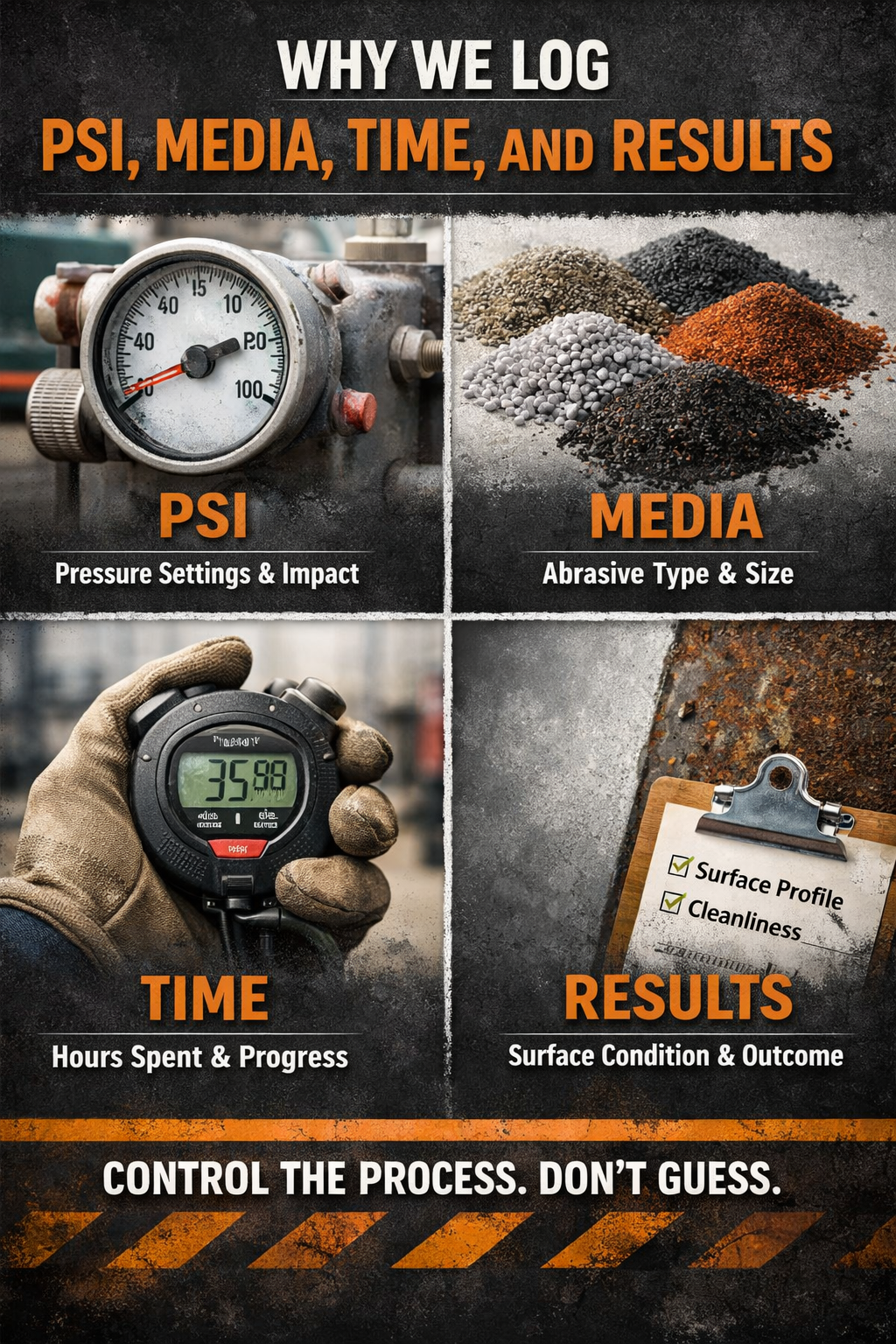
Why We Log PSI, Media, Time, and Results
Blasting isn’t guesswork. Logging PSI, media type, time, and results creates a repeatable record of what actually works. Here’s why tracking these details protects coating life, improves consistency, and exposes hidden causes of failure.
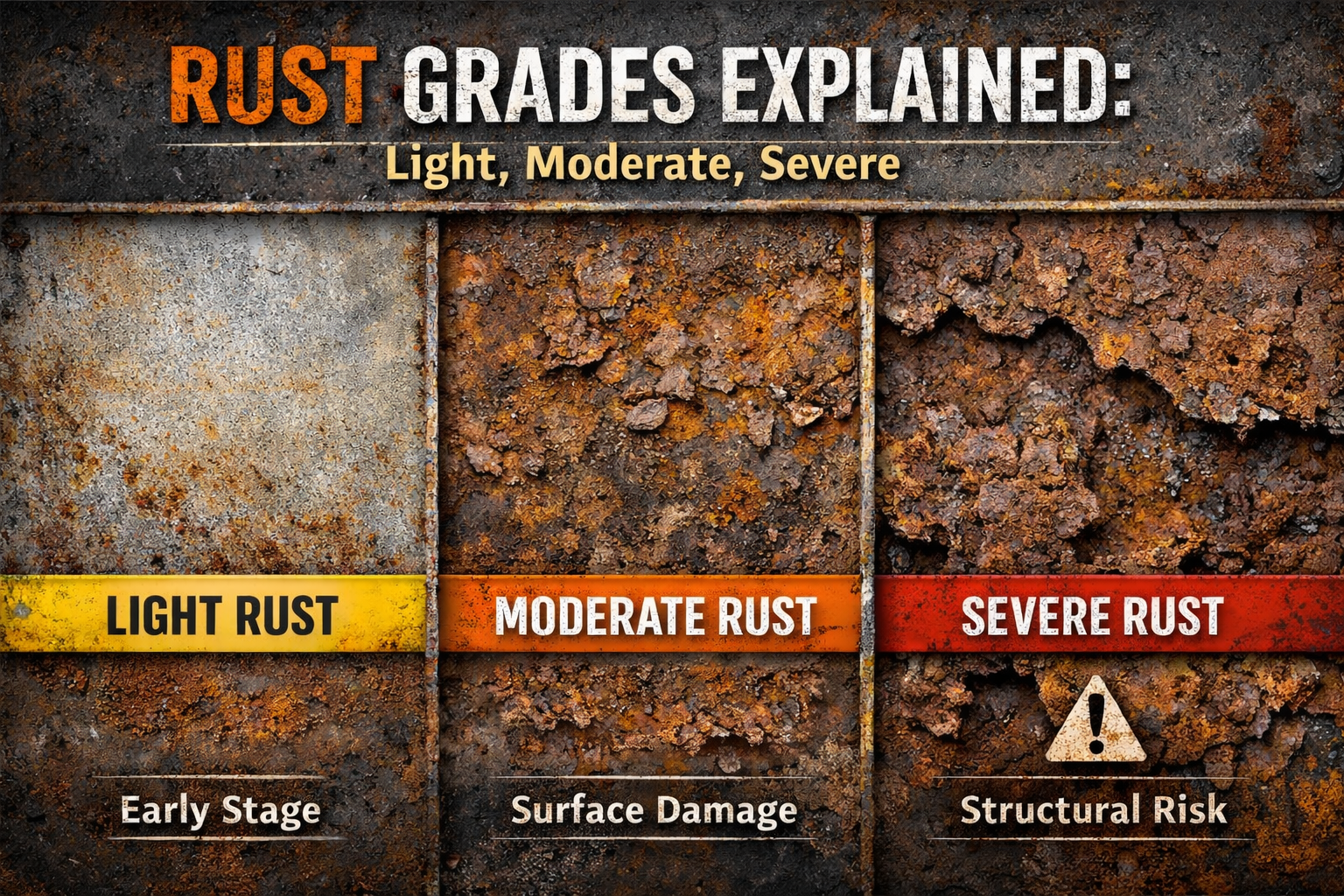
Rust Grades Explained: Light, Moderate, and Severe
Rust isn’t all the same and treating it that way is one of the fastest ways to guarantee coating failure. This breakdown explains the difference between light, moderate, and severe rust, what each one actually means for the steel underneath, and how the rust grade should dictate your surface preparation approach.
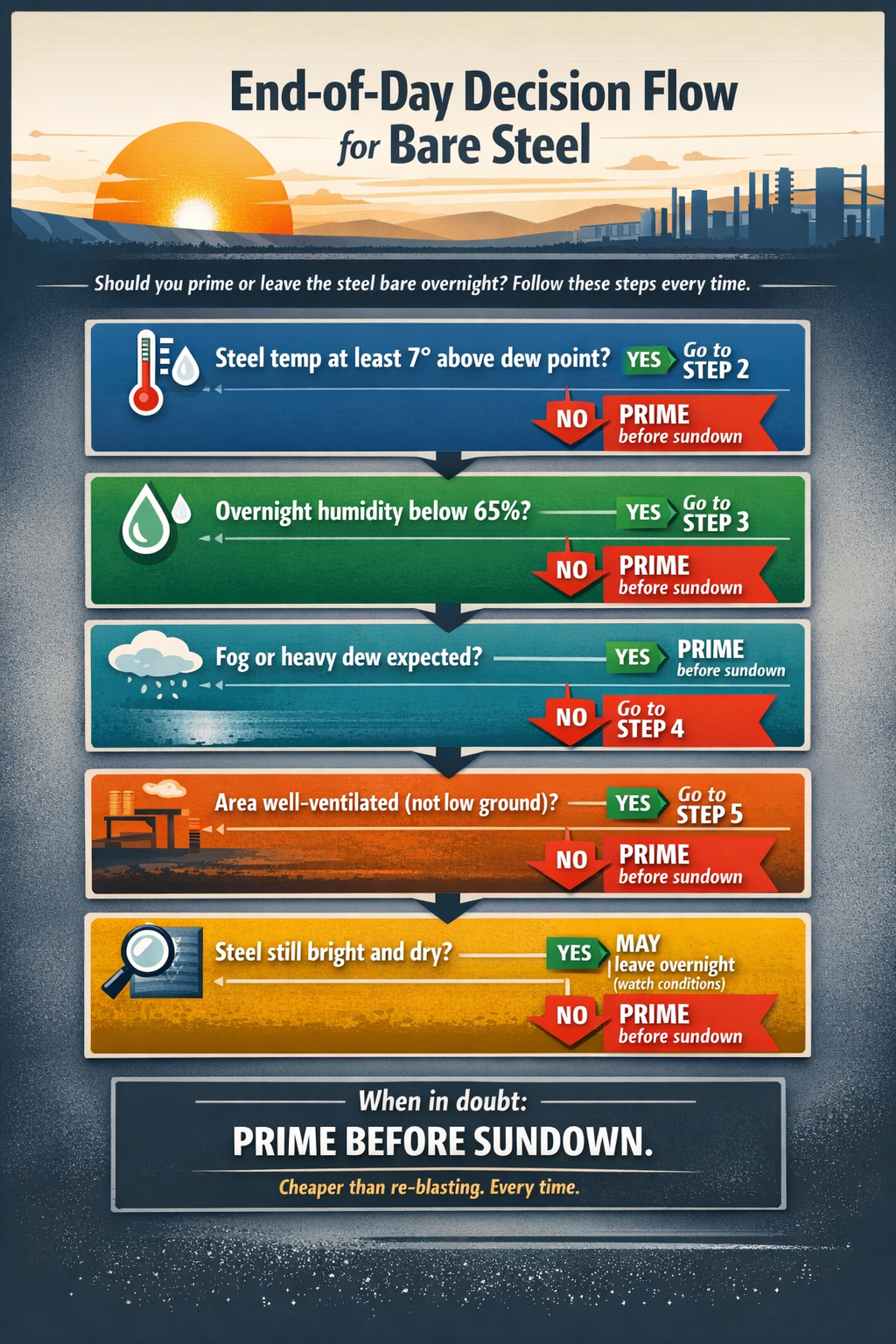
How Weather Impacts Blasting and Coatings
Weather quietly affects blasting and coating performance at every stage. Learn how temperature, humidity, dew point, and timing influence surface condition and when leaving bare steel overnight becomes a risk.
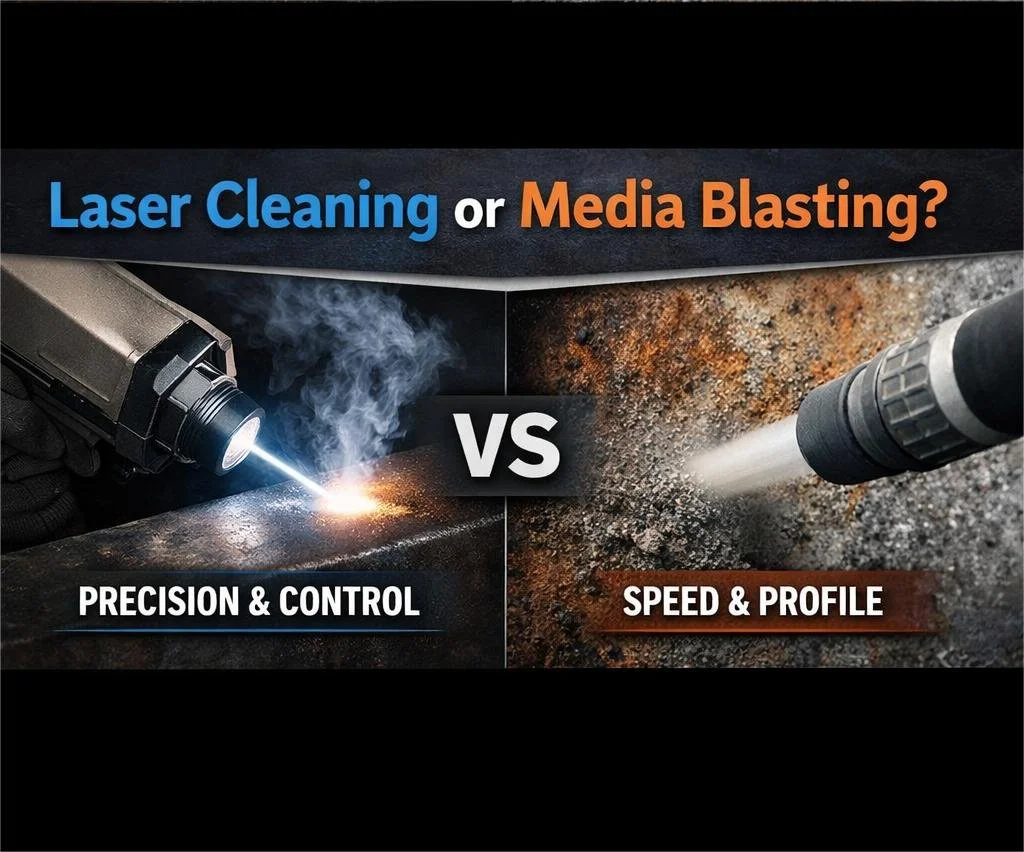
Laser Cleaning vs Media Blasting: When Each Wins
Laser cleaning and media blasting solve different problems. One excels at precision and control, the other at speed and surface profile. This post breaks down when each method actually works, where each one fails, and why they are not interchangeable in real-world coating performance.
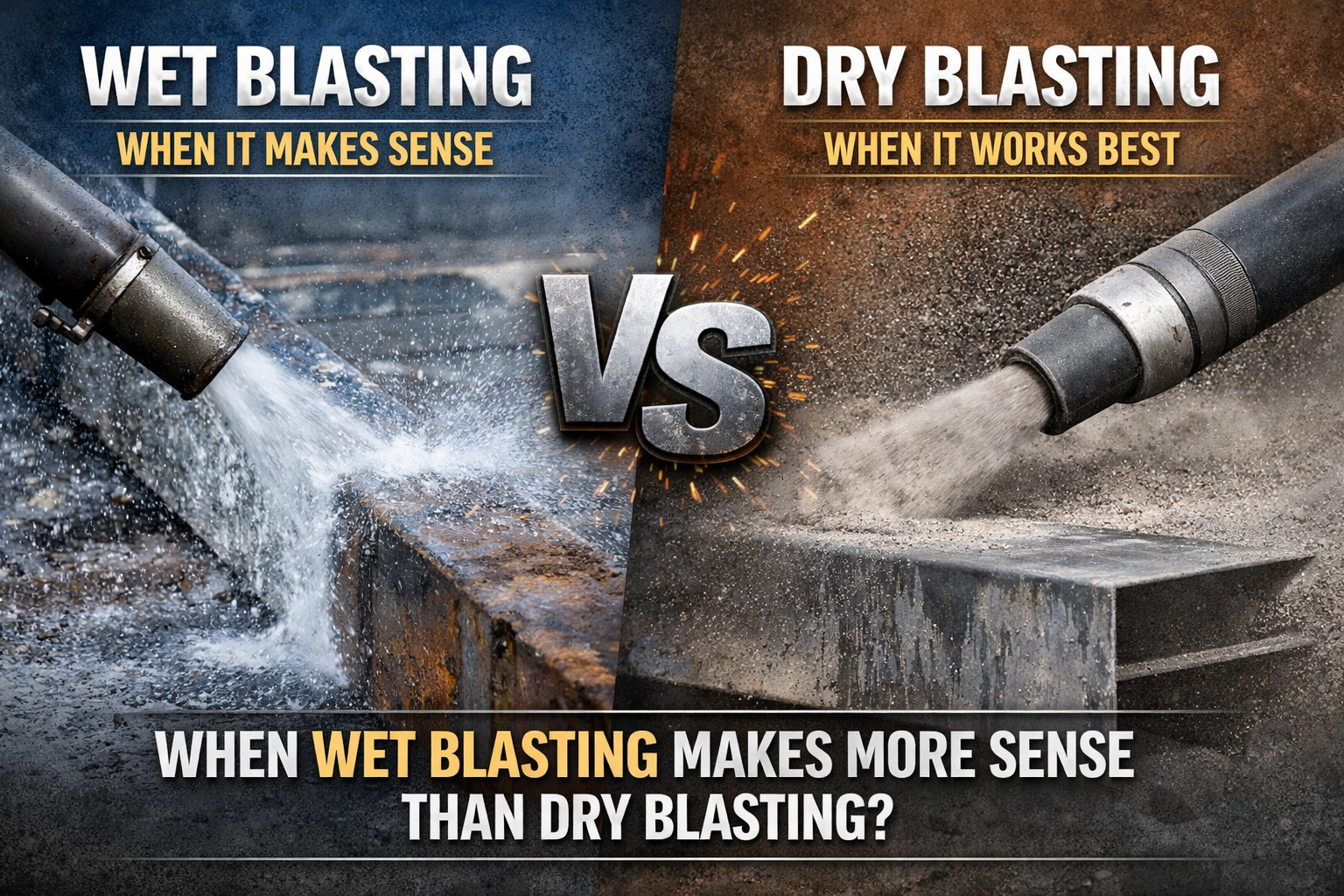
When Wet Blasting Makes More Sense Than Dry Blasting
Wet blasting isn’t better or worse than dry blasting. It’s a situational tool. Learn when wet blasting makes more sense, what problems it solves, and where it creates tradeoffs.
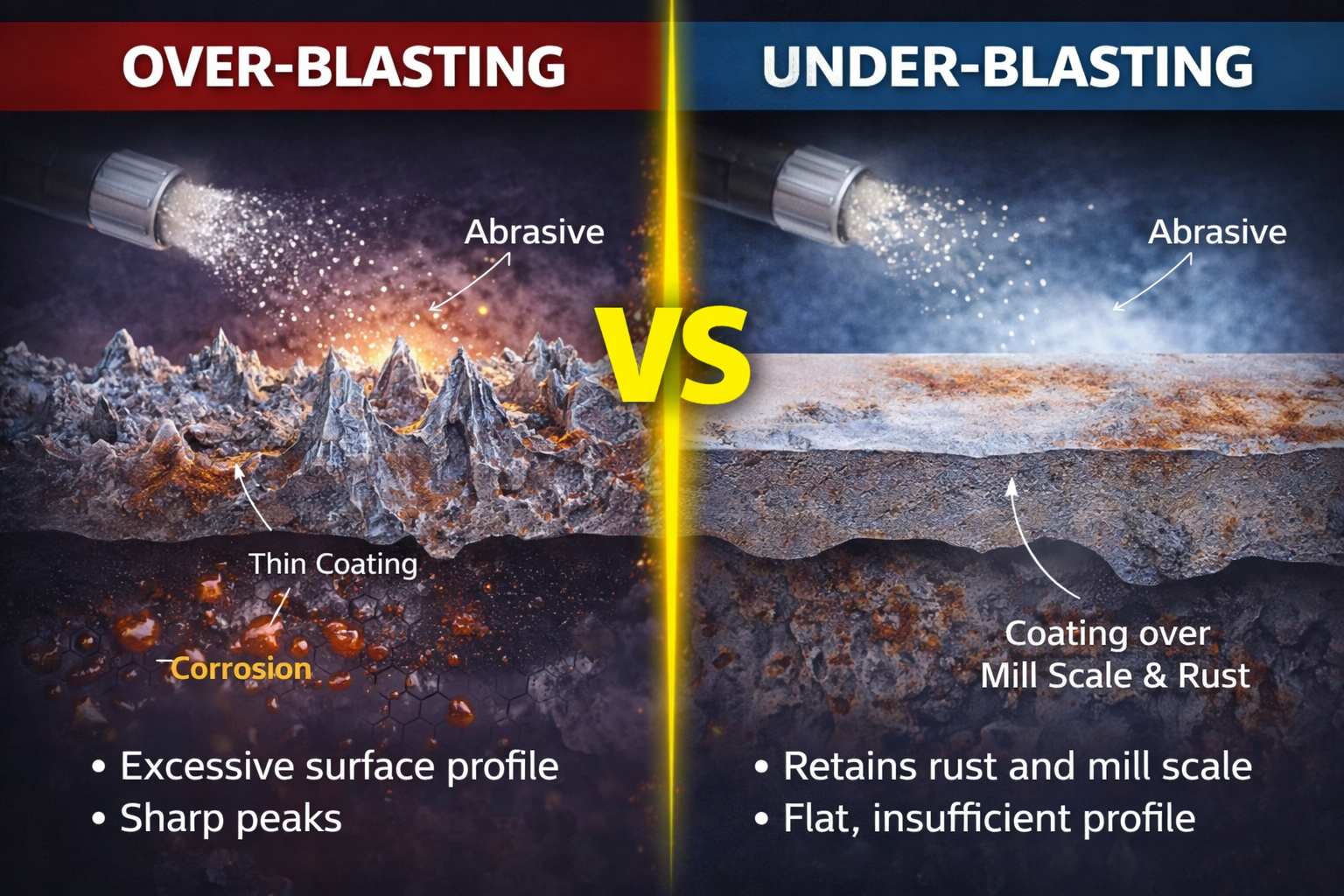
Over-Blasting vs Under-Blasting: How Both Shorten Coating Life
Over-blasting and under-blasting cause different problems, but they lead to the same result: shorter coating life. Here’s how each failure starts and why neither is harmless.
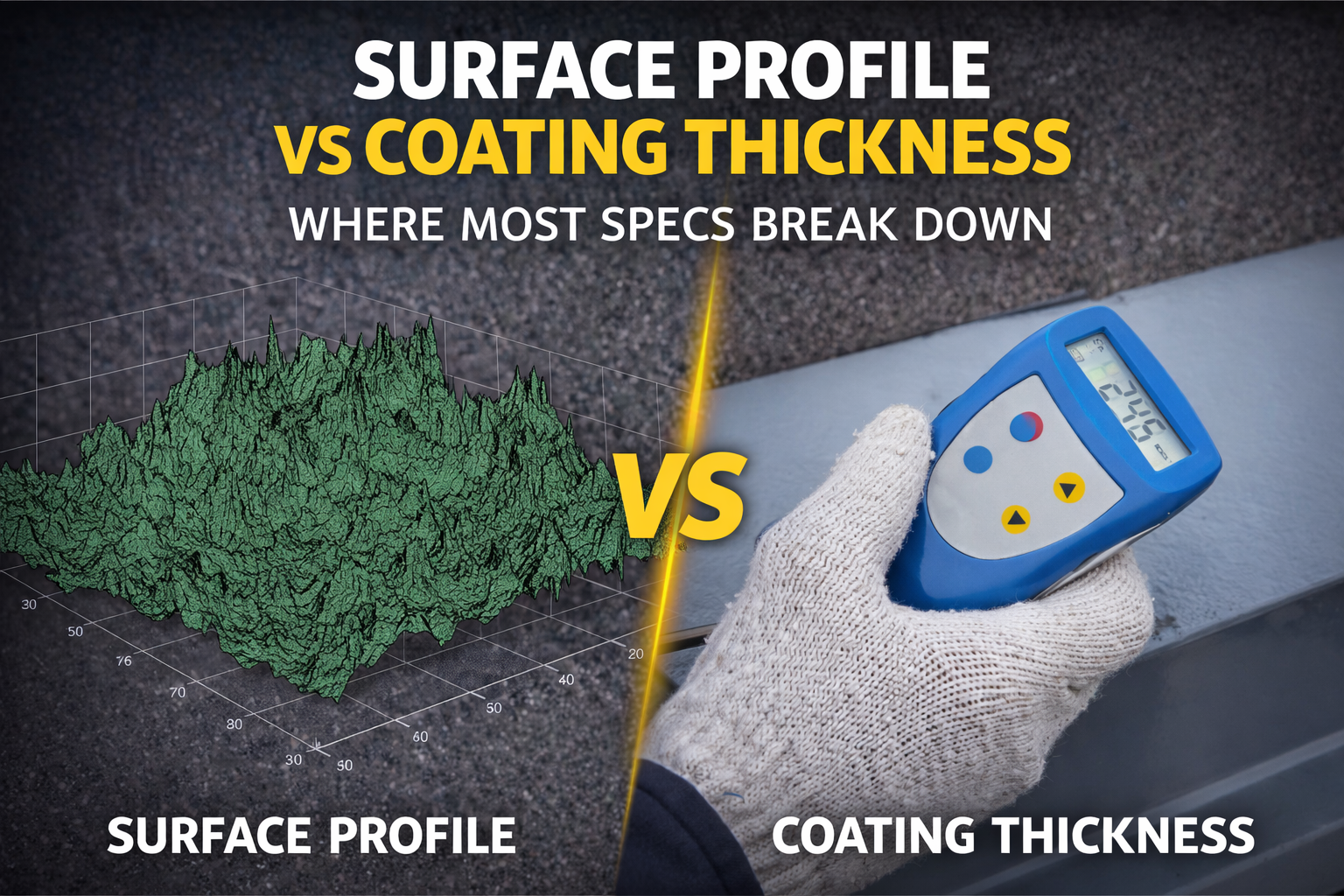
Surface Profile vs Coating Thickness: Where Most Specs Break Down
Surface profile and coating thickness must work together. Learn where specs fall short and how mismatches lead to early coating failure.
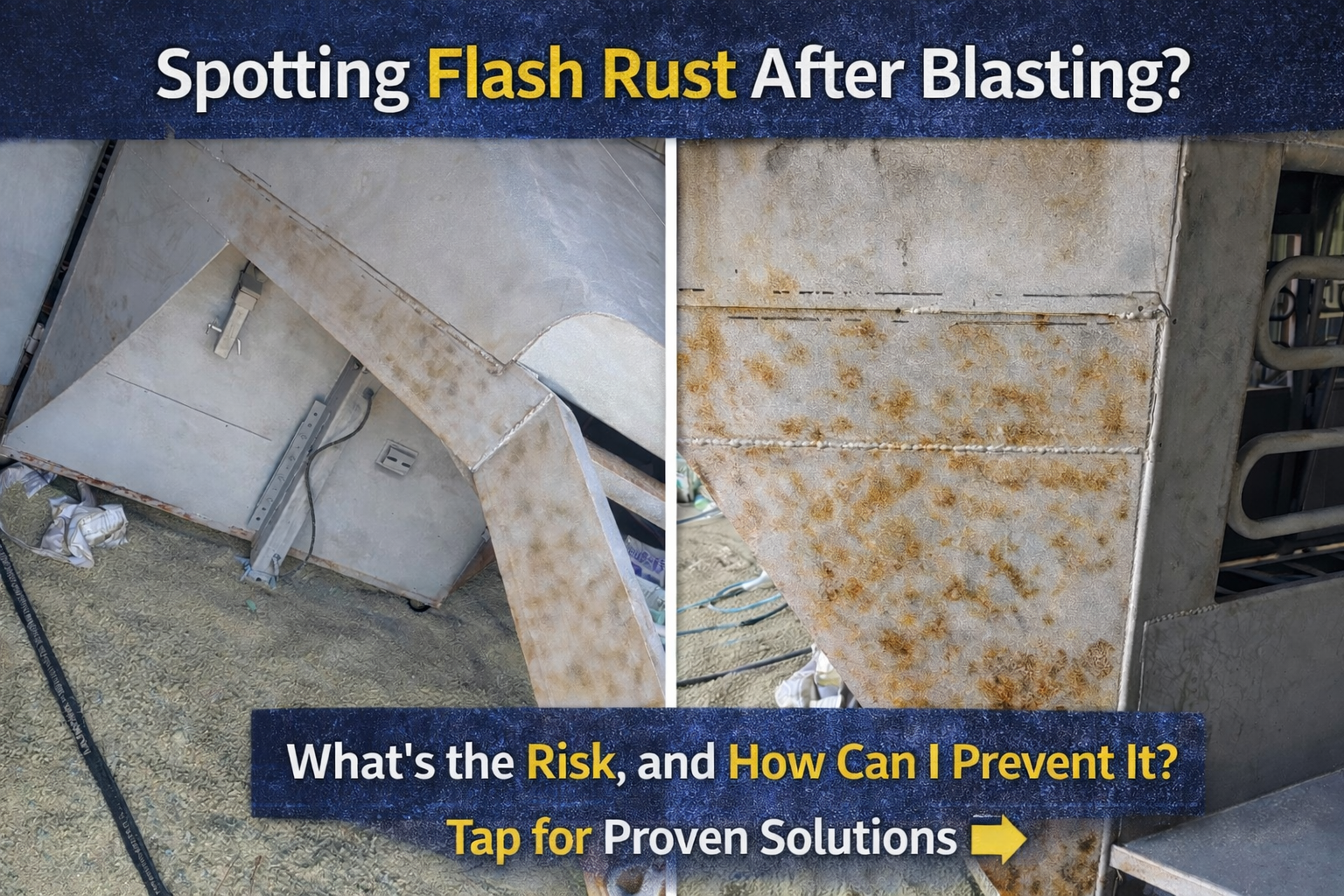
What Causes Flash Rust and How to Prevent It
Flash rust can appear within hours after blasting. Learn what causes it, why it happens so fast, and how to reduce the risk before painting.
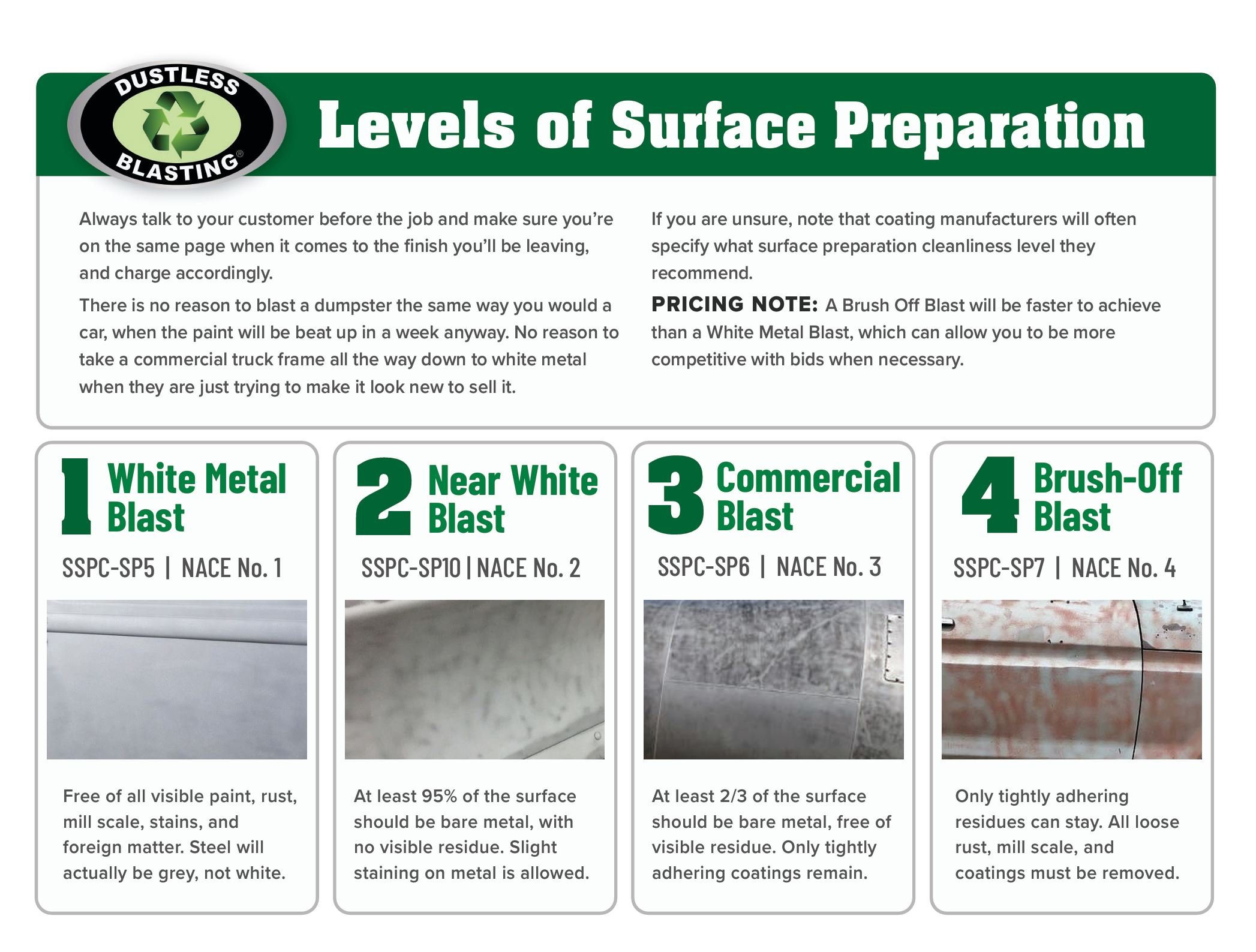
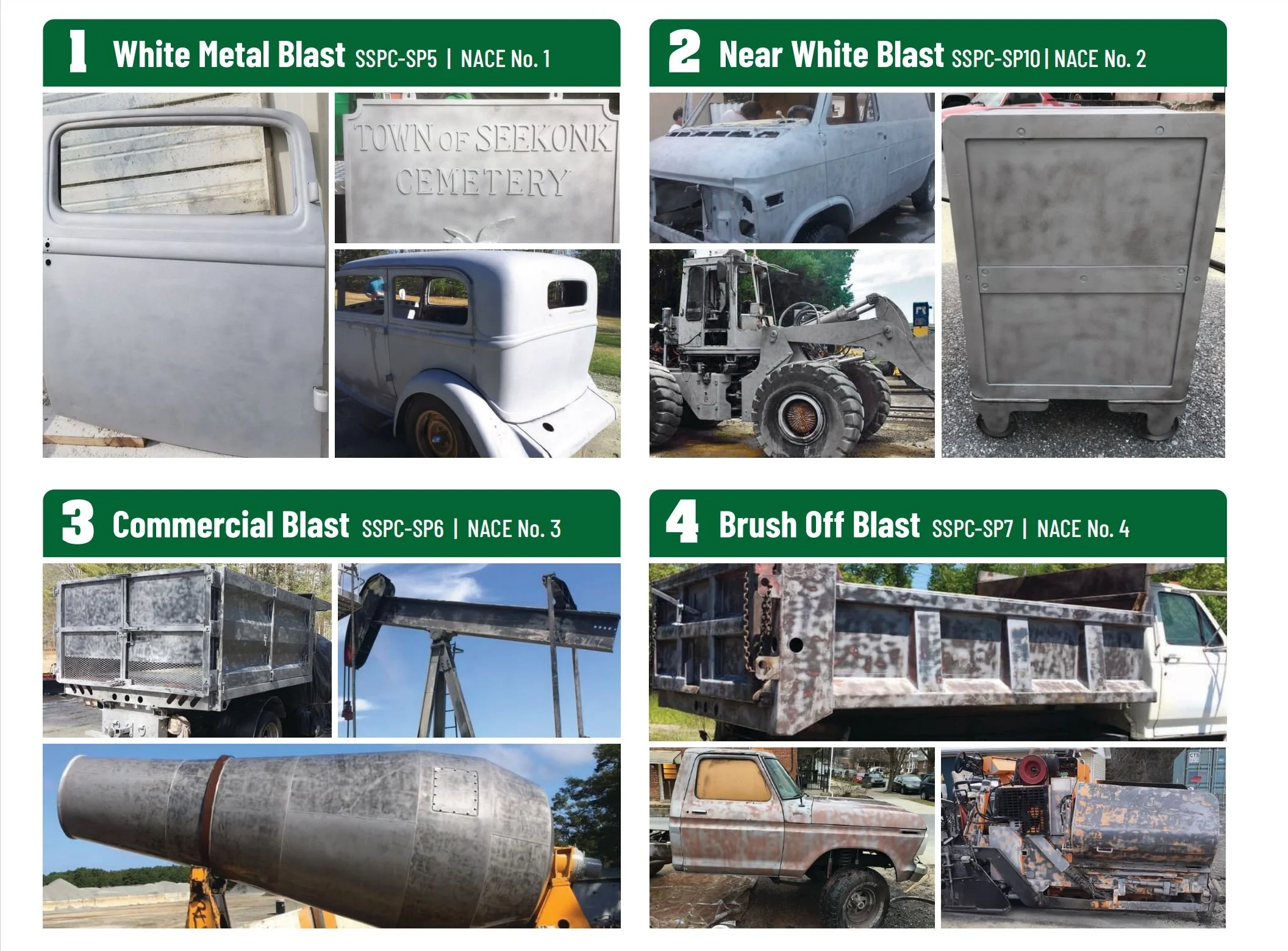
What Surface Prep Level Do You Actually Need?
Not every job needs the same surface preparation. Learn how light, medium, near-white, and white metal prep levels affect coating performance and cost.
(Image credit: MMLJ, Inc. - Dustless Blasting)
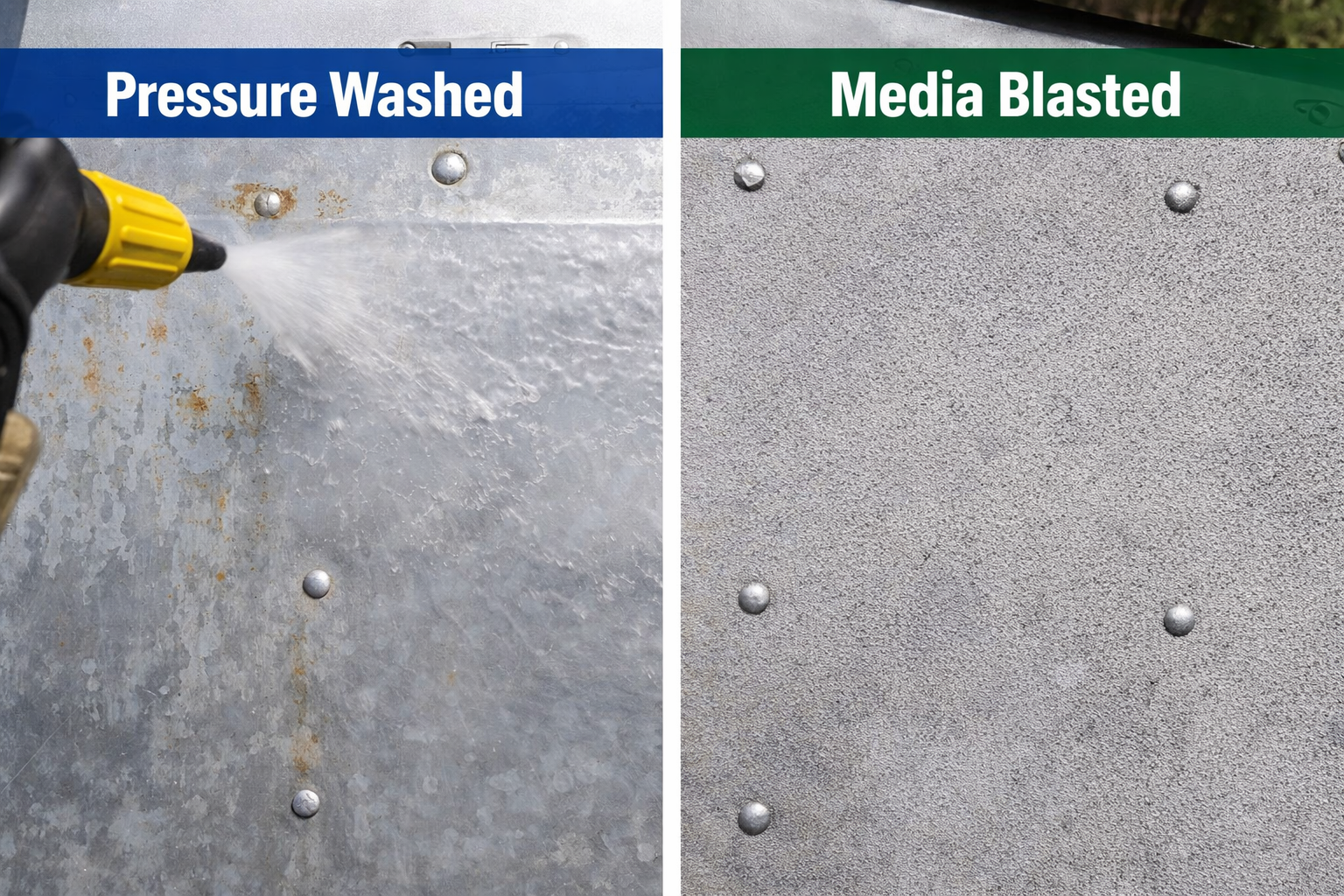
Why Pressure Washing Is Not Surface Preparation
Pressure washing cleans surfaces, but it does not prepare them for paint. Learn why surface texture matters and when media blasting is required.
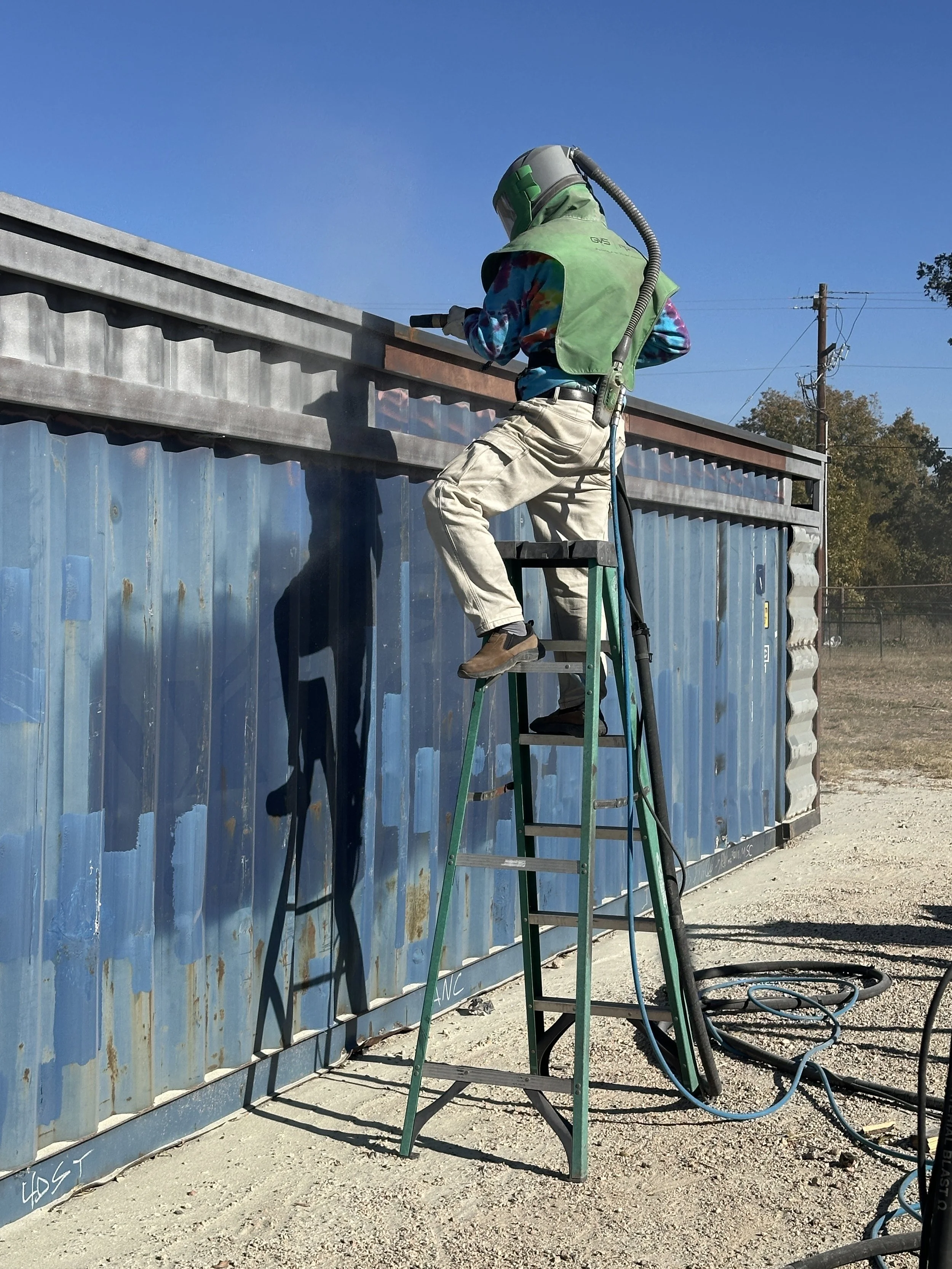
What a “Good” Blast Finish Actually Looks Like
A good blast finish isn’t about shine. Learn what a properly prepared surface really looks like and why even texture matters more than appearance.
(Image credit: MMLJ, Inc. - Dustless Blasting)
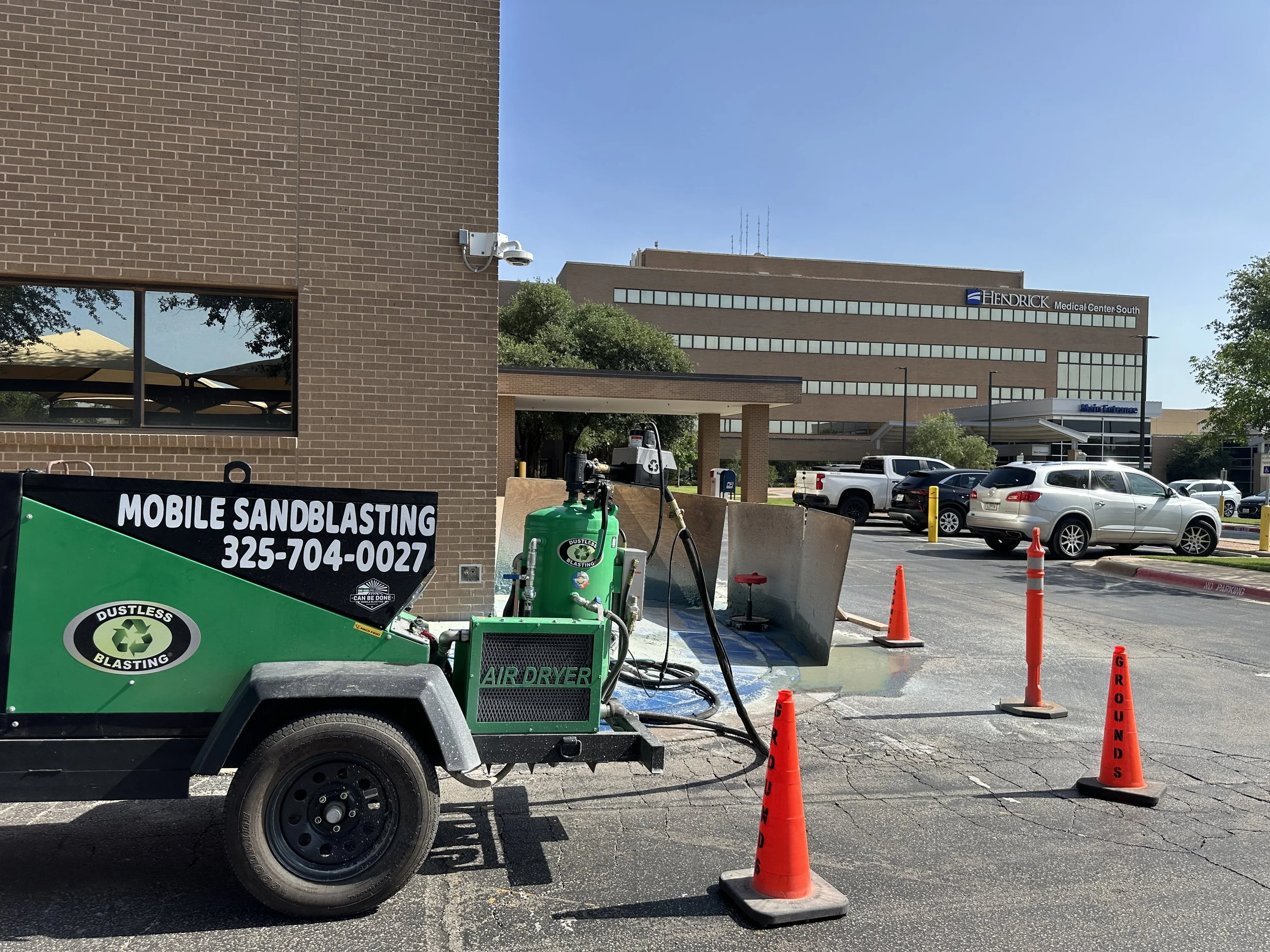
How Long Does Media Blasting Actually Take? (And Why It Depends)
Media blasting time depends on the surface, coating, setup, and job conditions. Learn what actually affects blasting time and why estimates vary.
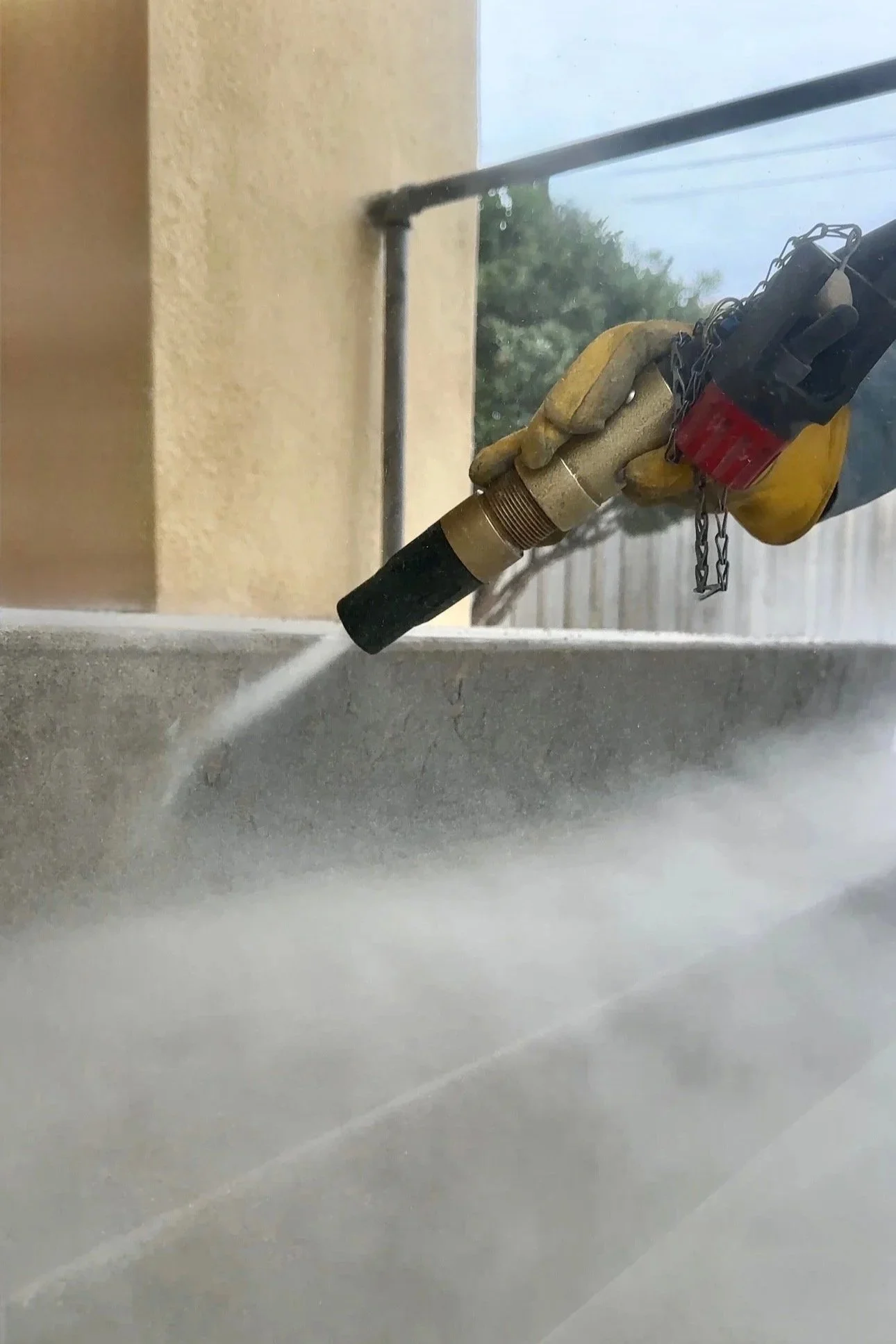
Why “Dustless Blasting” Isn’t Actually Dustless (And When It’s the Right Choice)
Dustless blasting, also called wet blasting, reduces airborne dust, static electricity, and heat. Learn when it makes sense to use it, when it doesn’t, and why dry blasting is still the primary method.
PSI, CFM, and Nozzle Size Explained (In Plain English)
PSI, CFM, and nozzle size control how blasting works. Learn what each one does and why all three must work together.