
Rust Grades Explained: Light, Moderate, and Severe
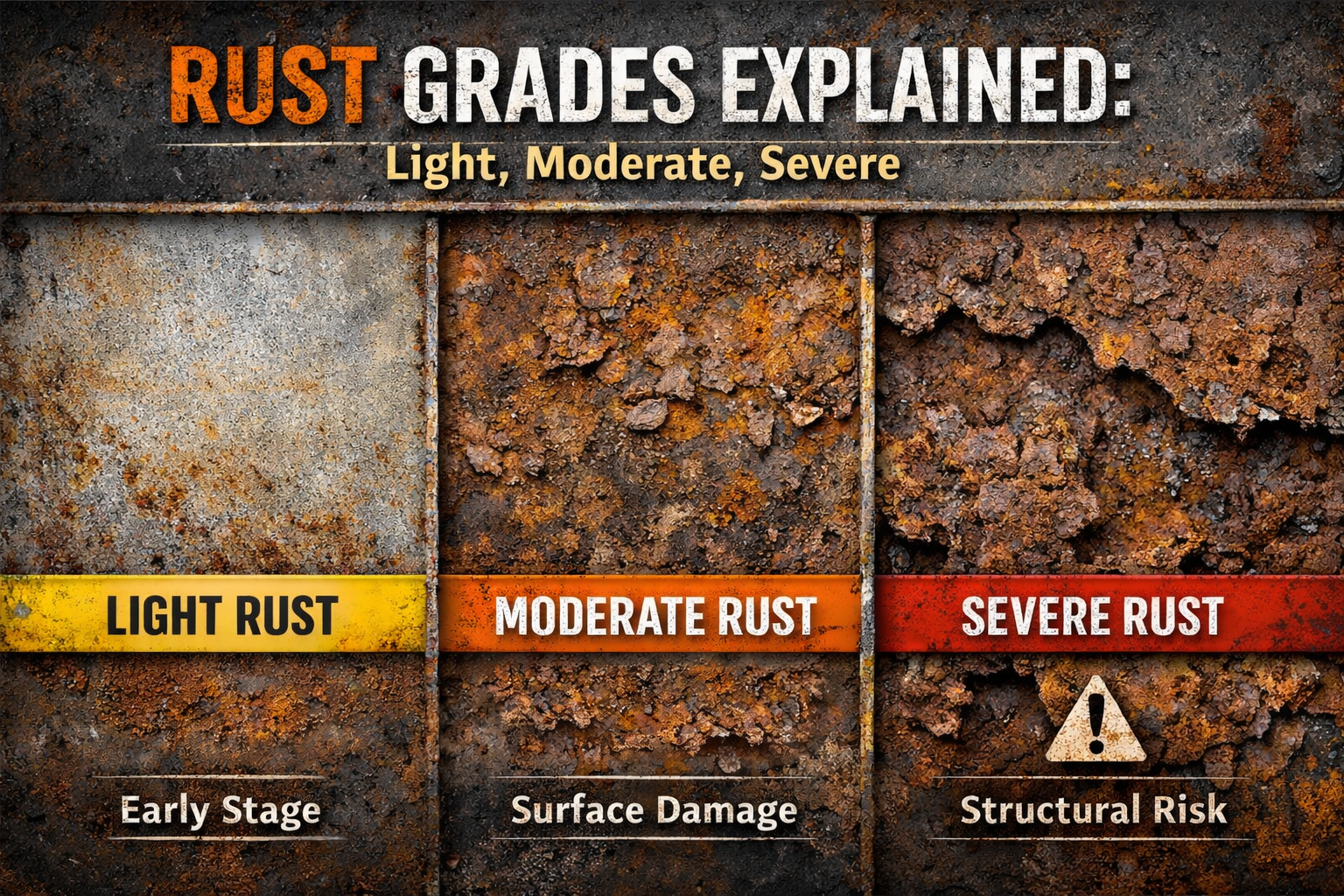
Rust is not a single condition. It is a spectrum.
Treating all rust the same is one of the fastest ways to under-prepare a surface or overpay for prep that adds no value. Rust grade determines how aggressive blasting needs to be, how much time the job will take, and whether the coating system even has a chance to perform.
This is not about labels. It is about understanding what the steel is actually telling you.
Light Rust: Early Stage, High Opportunity
Light rust is surface oxidation without measurable section loss. You usually see discoloration, light staining, or a thin, powdery layer that brushes off easily.
What matters here is not how it looks. It is what has not happened yet.
At this stage:
Rust has not penetrated deeply
Pitting is minimal or nonexistent
The original steel profile is largely intact
This is the easiest rust to remove and the cheapest to fix correctly.
Where people go wrong is assuming light rust can be ignored or painted over. It cannot. Rust does not stop reacting just because paint is applied. It continues underneath until adhesion fails.
Light rust still requires proper surface preparation. The difference is how much material needs to be removed to get there.
Moderate Rust: Where Most Jobs Actually Live
Moderate rust is where surface texture starts to change.
You will see:
visible pitting
scaling that does not brush off
uneven surfaces where rust has begun to eat into the steel
This is the most common rust grade encountered in real projects, and it is also where the most mistakes are made.
Moderate rust requires enough blasting energy to:
remove corrosion from pits
clean down to sound metal
restore a consistent surface for coating
The mistake is stopping early because the surface looks clean. Rust inside pits does not announce itself. If it stays, it becomes the first failure point.
Moderate rust is also where blasting time and cost start to climb. Underestimating this stage is how schedules slip and budgets get stressed.
Severe Rust: Structural Decisions Start Here
Severe rust is not just a coating problem. It is a material condition problem.
Characteristics include:
heavy scale
deep pitting
section loss
flaking layers of corrosion
At this stage, blasting alone cannot fix everything. You may be able to clean the surface, but you cannot blast steel back into existence.
Severe rust forces hard questions:
Is this asset still structurally sound
Does coating extend service life enough to justify the cost
Are repairs or replacement required before coating
Blasting severe rust without acknowledging these questions leads to cosmetic fixes that fail quickly and predictably.
Why Rust Grade Dictates Prep Strategy
Rust grade determines more than how aggressive blasting needs to be.
It affects:
media selection
pressure settings
time on surface
coating thickness requirements
inspection criteria
realistic service life expectations
Treating light rust like severe rust wastes money. Treating severe rust like light rust wastes time and credibility.
The prep strategy must match the condition, not the hope.
The Visual Trap
Rust often looks worse or better than it actually is.
Paint staining can exaggerate appearance. Dirt can hide damage. Lighting can flatten texture. Photos lie.
This is why experienced operators rely on:
touch
surface feel
pit depth
steel response during blasting
Visual assessment alone is not enough to classify rust correctly.
Why Coatings Fail When Rust Grade Is Misjudged
Most premature failures tied to rust are not caused by bad coatings. They are caused by mismatch.
Examples:
light prep used on moderate rust
coating systems not designed to bridge pits
insufficient film build for rough surfaces
unrealistic expectations on heavily corroded assets
When rust grade is misjudged, everything downstream is compromised.
The Practical Takeaway
Rust grading is not about memorizing standards. It is about understanding severity and consequences.
Light rust offers the biggest return on proper prep.
Moderate rust demands discipline and time.
Severe rust requires honest decision-making before blasting even begins.
Skipping that evaluation is how surface prep becomes expensive without being effective.
Final Thought
Rust is telling you a story about time, exposure, and neglect. The job of surface preparation is not to erase that story. It is to respond to it appropriately.
Getting the rust grade right sets the ceiling for how long any coating will last.
Next up: Why We Log PSI, Media, Time, and Results
