
What Blasters Actually Consider When Pricing: Trailers
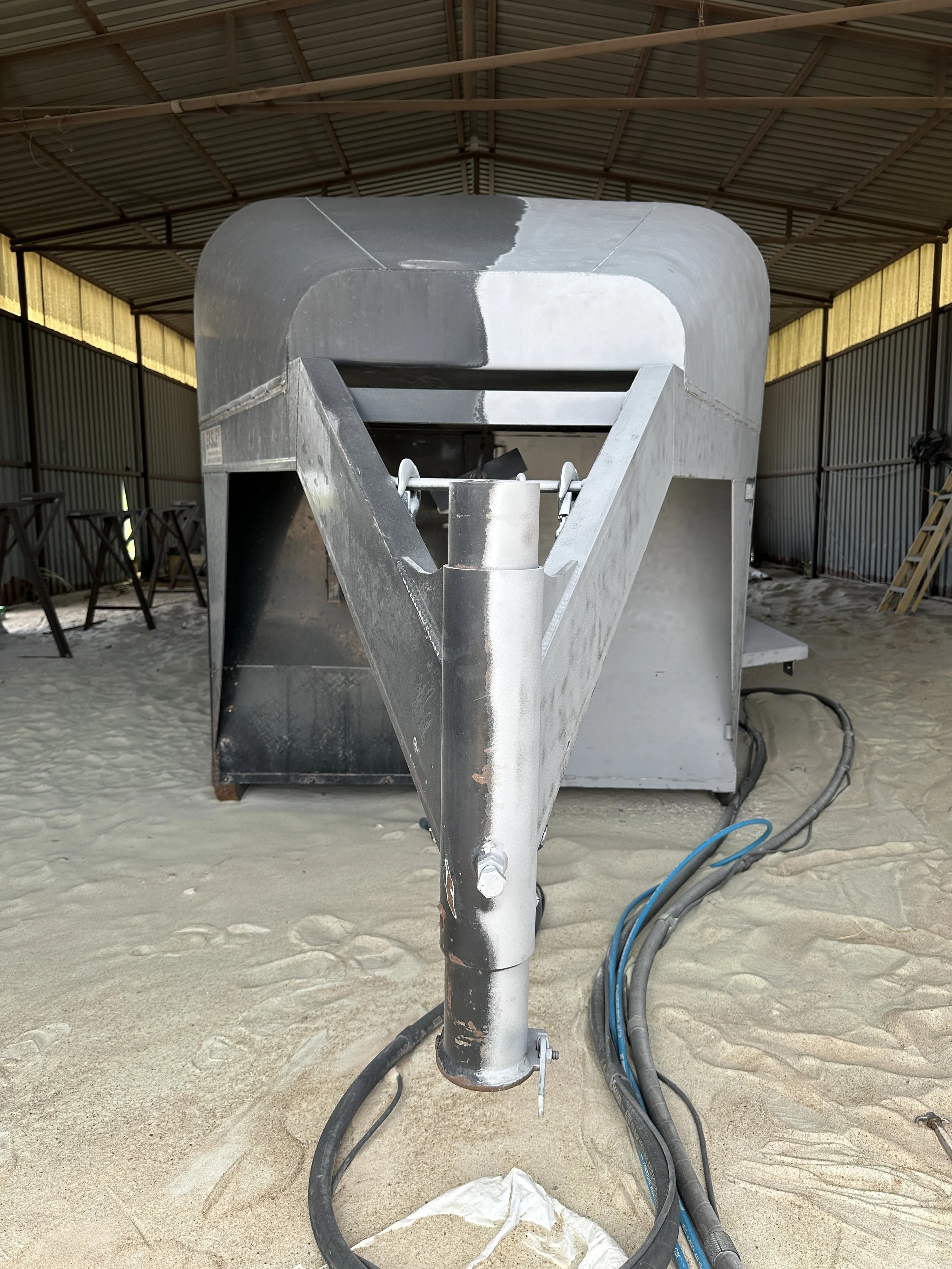
Trailer blasting looks simple from a distance. Big flat panels. Steel construction. Easy to identify the square footage.
That surface-level view is why customers are often surprised by the price, and why newer blasters underbid these jobs and regret it later.
A trailer is not priced like a fence. It is priced like a confined structure, a mobile asset, and a coating system all rolled into one. The cost is driven less by size and more by conditions, access, and consequences.
Here’s what experienced blasters are actually thinking about when they price a trailer job.
Outside vs Inside Is Not a Small Difference
The exterior of a trailer is exposed. The interior is confined.
That one difference changes:
how dust behaves
how long setup takes
how hard cleanup is
how quickly media is consumed
how safely the work can be done
Outside blasting usually means:
natural airflow
easier hose movement
faster progress
simpler containment
better visibility
Inside blasting means:
limited airflow
dust buildup
slower production
higher safety risk
more protective equipment
more time per square foot
Even when the steel condition is similar, the environment is not. That’s why interior work is often priced higher per square foot.
Coating Type Drives Removal Cost More Than Rust
Rust is predictable. Coatings are not.
A thin, brittle paint layer can come off easily. A rubberized liner, epoxy, or multi-layer industrial coating can turn a job into a grind.
Blasters look at:
coating thickness
number of layers
hardness
elasticity
how it fractures under impact
Two trailers of the same size can take radically different amounts of time depending on what’s stuck to them. That uncertainty has to be priced in.
Geometry Changes Everything
Trailers look flat until you get close.
Inside a trailer, you have:
corners
ribs
weld seams
floor transitions
door frames
roof seams
Those features:
slow nozzle travel
trap coatings
hide corrosion
require detail work
Blasting is fastest on wide, open panels. Every angle, seam, and recess adds time. Pricing has to reflect how much of the trailer is simple surface and how much is detail work.
Media Consumption Is Not Linear
Square footage does not equal media usage.
Media consumption depends on:
coating hardness
rust depth
profile requirement
rebound loss
interior dust loading
Inside trailers often burn through more media because:
rebound stays in the space
visibility drops
operators slow down
removal efficiency drops
Blasters price media as a variable cost, not a flat rate. Jobs with high uncertainty get higher margins for a reason.
Containment and Cleanup Are Real Labor
Containment is not just tarps. It’s:
time to set up
time to seal
time to dismantle
time to clean
time to dispose
Inside trailer work usually requires:
more masking
more dust control
more frequent cleanup
slower pace to maintain visibility
Outside work lets gravity and wind help. Inside work makes you manage everything manually.
That labor shows up in the quote.
Surface Condition Isn’t Always Visible Up Front
Trailers hide problems well.
You don’t see:
floor corrosion under liners
rust behind seams
damage under patch coatings
thin steel until blasting starts
Experienced blasters price for what might be there, not just what they see at first glance. That’s not padding. That’s survival.
Underbidding unknowns is how jobs turn into losses.
Downtime and Risk Are Part of the Price
Trailer blasting isn’t just prep work. It often happens because:
the trailer is being repurposed
it’s being re-lined
it’s entering service
it’s being sold
That means:
timelines matter
failures are expensive
rework is visible
coatings are critical
Blasters factor in:
reblast risk
weather delays
coating compatibility
access restrictions
Jobs with higher consequences cost more because mistakes cost more.
Why Flat Pricing Fails on Trailers
Flat rates assume:
predictable coatings
predictable rust
predictable access
predictable cleanup
Trailers rarely offer that.
That’s why experienced blasters quote:
by condition
by access
by environment
by expected time
by risk
It’s not about charging more. It’s about charging realistically.
What Customers Should Take From This
If a trailer quote seems high, it usually means:
coatings are difficult and unpredictable
interior work is involved
access is limited or difficult
cleanup will be heavy
risk is high
The price is not for the square footage.
It’s for the complexity.
A cheap trailer blast is often cheap because something is being skipped.
What Blasters Should Take From This
Trailer pricing should be based on:
environment, not size
coatings, not assumptions
access, not optimism
cleanup, not hope
If your quote feels uncomfortable, it’s probably honest.
Final Thought
Blasting a trailer is not just removing material. It’s preparing an enclosed steel structure for its next life. That makes it closer to an industrial job than a cosmetic one.
Pricing reflects that reality, whether people see it or not.
