
How to Prepare Your Asset Before We Arrive
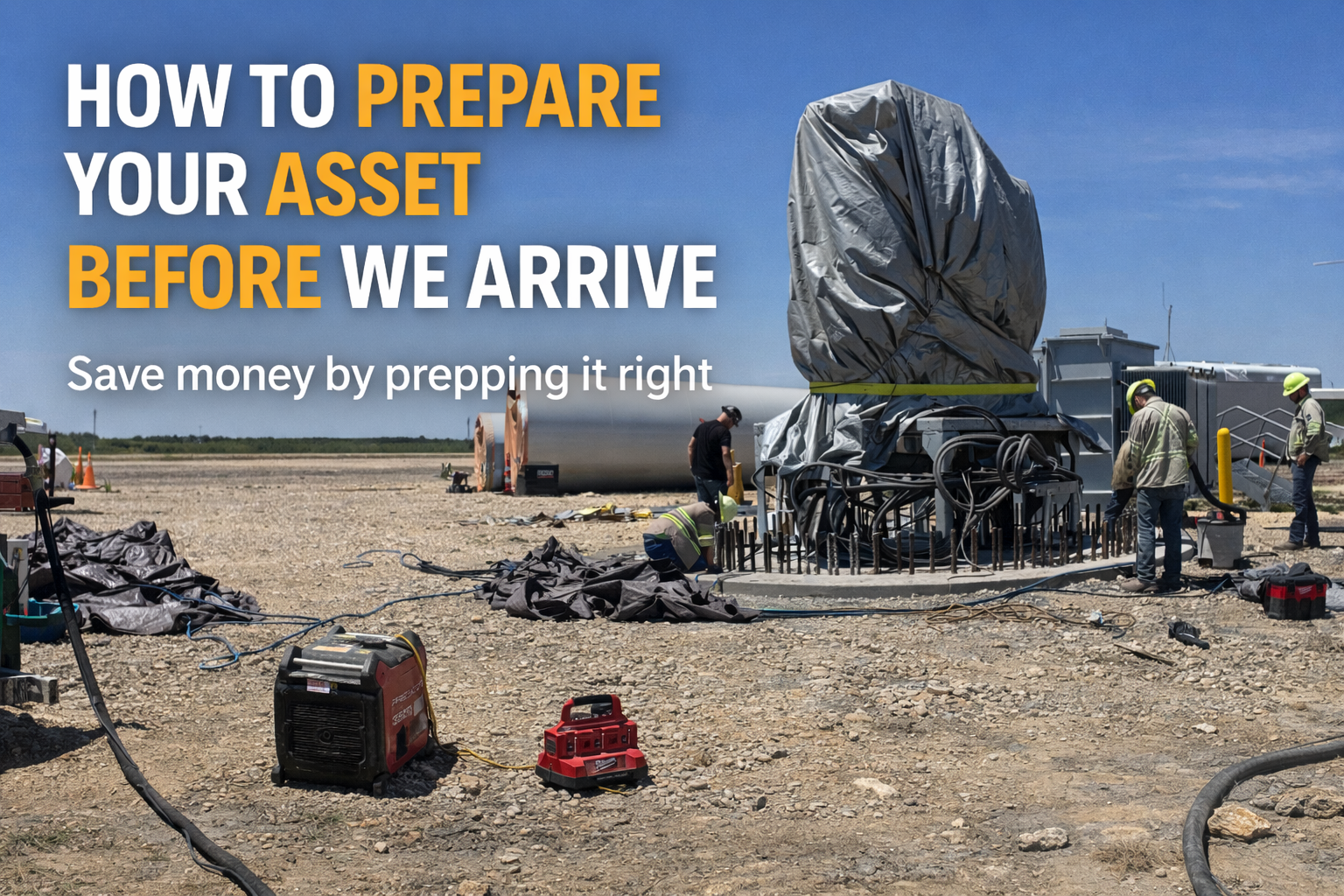
Blasting is not just about what happens while the nozzle is running. A surprising amount of success or failure is decided before the blaster ever pulls into the yard.
When jobs go sideways, it is rarely because the blasting process itself is mysterious. It is usually because the surface, site, or asset was not ready to be blasted in the first place.
This is what preparation actually means from a blaster’s point of view.
Clear Access Matters More Than You Think
If we cannot reach it, we cannot blast it efficiently.
Common problems:
Vehicles parked too close
Materials stacked against the asset
Fences, railings, or scaffolding blocking angles
Tight indoor spaces with no hose routing plan
What helps:
Leave at least 6 to 8 feet around the asset where possible
Make sure ladders, lifts, or platforms are already planned if height is involved
Think in terms of nozzle line of sight, not walking space
If the blaster has to spend time rearranging the site, that time is paid for one way or another.
Remove What Should Not Be Blasted
Blasting removes coatings. It also removes:
Stickers
Labels
Soft sealants
Fragile trim
Plastic parts
Rubber gaskets
What slows jobs down:
“We forgot that part was plastic”
Masking requests after blasting starts
Sensitive components still installed
Best practice:
Strip what can be removed ahead of time
Identify what absolutely must stay
Flag anything fragile
Blasters cannot guess which parts matter to you.
Clean Does Not Mean Ready
Pressure washing helps, but it does not replace preparation.
Blasters struggle most with:
Thick grease
Oil residue
Heavy mud or manure
Sticky contaminants
If the nozzle hits oil, it spreads oil.
Helpful prep:
Degrease heavy buildup
Knock off loose dirt and mud
Drain fluids if possible
The goal is not spotless.
The goal is no contaminant that smears instead of breaks loose.
Know What Is Under the Paint
Different substrates behave very differently under blast.
Steel, aluminum, cast iron, concrete, fiberglass, and wood all respond differently to:
Pressure
Media
Angle
Time
Preparation mistake:
Assuming everything is steel
Not disclosing thin sections
Forgetting prior repairs or fillers
If the asset has:
Body filler
Fiberglass patches
Thin aluminum panels
Weld repairs
Say so. It changes how blasting must be done.
Environmental Conditions Are Part of Preparation
Preparation is not just physical. It is atmospheric.
Things that matter:
Temperature
Humidity
Dew point
Wind
Rain forecast
Problems happen when:
Bare metal sits overnight in humid air
Rain hits freshly blasted steel
Cold steel traps moisture
Wind blows dust back onto the surface
If the job will not be coated quickly, that needs to be planned around.
Sometimes the best preparation is:
Waiting a day
Scheduling earlier
Adjusting the blast scope
Not every delay is inefficiency. Some are protection.
Power, Air, and Water Are Not Always Obvious
On-site resources affect blasting and cleanup time.
Common surprises:
No power within reach
Water pressure too low
Water source far away
Preparation step:
Confirm what utilities are actually available
Ask what the blaster needs
Verify access ahead of time
This avoids downtime disguised as “job time.”
Containment Is Not Optional on Many Jobs
If blasting debris cannot be controlled, the job stops.
Containment planning includes:
Nearby vehicles
Adjacent buildings
Windows and doors
Wind direction
Drainage
Helpful prep:
Move what can be moved
Identify what cannot
Allow space for tarps or curtains
Containment takes time and material. Planning it early saves both.
The Hidden Cost of Poor Preparation
Poor prep does not just slow blasting. It causes:
Uneven profiles
Contaminated surfaces
Flash rust
Missed areas
Coating failure later
Most rework traces back to:
Access
Cleanliness
Disclosure
Environment
Blasting is mechanical. Failures are usually logistical.
Final Thought
Blasting works best when the surface is treated like a system, not just a target.
Preparation is not about making the blaster’s job easier. It is about making the result predictable.
The better the asset is prepared, the more the blasting behaves like a controlled process instead of a rescue operation.
Next up: Common Myths About Media Blasting
