
Blasting Media with Silica vs Without: What the Difference Really Means
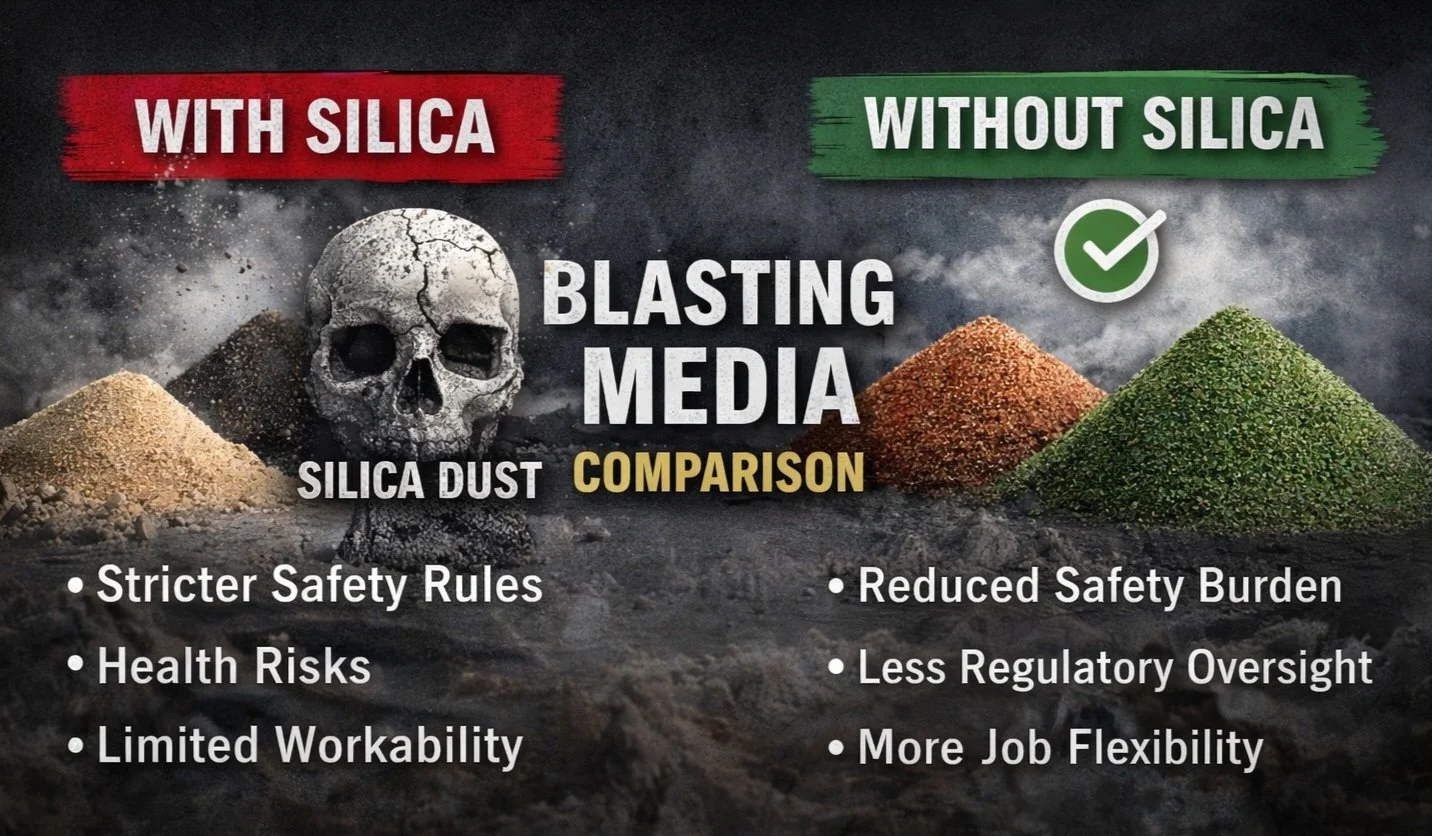
Not all blasting media is created equal, and one of the biggest dividing lines is whether the media contains crystalline silica or not.
That difference is not just academic. It affects:
how the job is done
what safety controls are required
what environments you can work in
and whether the work is even allowed in some places
Silica content changes the rules of the job, not just the dust.
What “Silica” Actually Means in Blasting Media
Silica is a mineral found naturally in sand and some slags. When blasted, it breaks into microscopic particles that stay airborne and can be inhaled deep into the lungs.
In blasting, silica shows up mainly in:
natural sand
some coal slags
certain mineral-based abrasives
Silica-free or low-silica media includes:
crushed glass
garnet (low silica varieties)
steel grit and shot
specialty synthetic abrasives
The difference is not just composition. It is what happens when the media fractures.
Why Silica-Containing Media Is a Problem
Silica dust is dangerous because:
particles are extremely small
they stay airborne for long periods
they penetrate deep into lung tissue
the damage is permanent
This is why silica exposure is tied to:
silicosis
lung cancer
chronic respiratory disease
From a jobsite perspective, silica:
requires stricter containment
requires higher-grade respirators
limits who can be near the work
often forces wet blasting or full enclosure
It also changes how long people can work in the blast zone without exceeding exposure limits.
What Changes When Media Is Silica-Free
Silica-free does not mean “safe to breathe,” but it does mean:
lower health risk per unit of dust
less regulatory burden
more flexibility in work environments
Silica-free media allows:
dry blasting in more locations
simpler containment
fewer access restrictions
easier compliance with exposure rules
It also reduces the long-term health risk to operators, which is not a small thing when blasting is your livelihood.
Performance Differences Are Secondary
People often assume silica media is chosen for performance. In modern blasting, that is rarely true.
Removal speed and profile are driven more by:
hardness
particle shape
mesh size
impact energy
Not by whether silica is present.
Crushed glass can cut aggressively.
Garnet can create clean, consistent profile.
Steel grit can recycle efficiently.
Silica is not chosen because it works better. It is chosen because it is cheap or familiar.
Where Silica Media Still Shows Up
Silica-containing media still appears:
in older operations
in unregulated environments
in DIY blasting
in low-bid work
in places where rules are ignored
Its presence usually signals:
higher health risk
higher liability
and often lower overall job control
When you see silica media being used openly, it usually means something else is being skipped too.
Why This Matters to Customers, Not Just Blasters
If blasting happens on your property or asset:
you are part of the exposure environment
your site can become contaminated
your project can be shut down
your liability does not disappear
Silica does not stay in one place. It travels with dust.
Choosing silica-free media is not just a safety choice. It is a project stability choice.
The Tradeoff People Don’t Talk About
Silica-free media often costs more per bag.
But silica-containing media often costs more:
in containment
in PPE
in compliance
in slowed production
in long-term risk
Cheap media shifts cost into other categories. Usually into risk.
How This Affects Method Choice
Media selection interacts with:
dry vs wet blasting
indoor vs outdoor work
proximity to people
disposal requirements
Silica-free media allows:
more dry blasting
less aggressive suppression
simpler cleanup
wider job acceptance
Silica media forces:
more controls
more restrictions
and fewer options
The media choice determines how the rest of the job must be structured.
The Bottom-Line Difference
Silica-containing media:
increases health risk
increases regulatory burden
limits where and how blasting can occur
Silica-free media:
lowers exposure risk
expands work environments
simplifies compliance
supports modern blasting practices
This is why sand is considered outdated, not because it does not remove paint, but because of what it does to people and projects.
Final Thought
The difference between silica and non-silica blasting media is not just what they remove. It is what they introduce into the air, the site, and the future.
Blasting always creates dust.
Silica determines how dangerous that dust is.
Choosing media is not just a performance decision. It is a responsibility decision.
Next up: Blasting Heavy Equipment: Hidden Time Traps
