
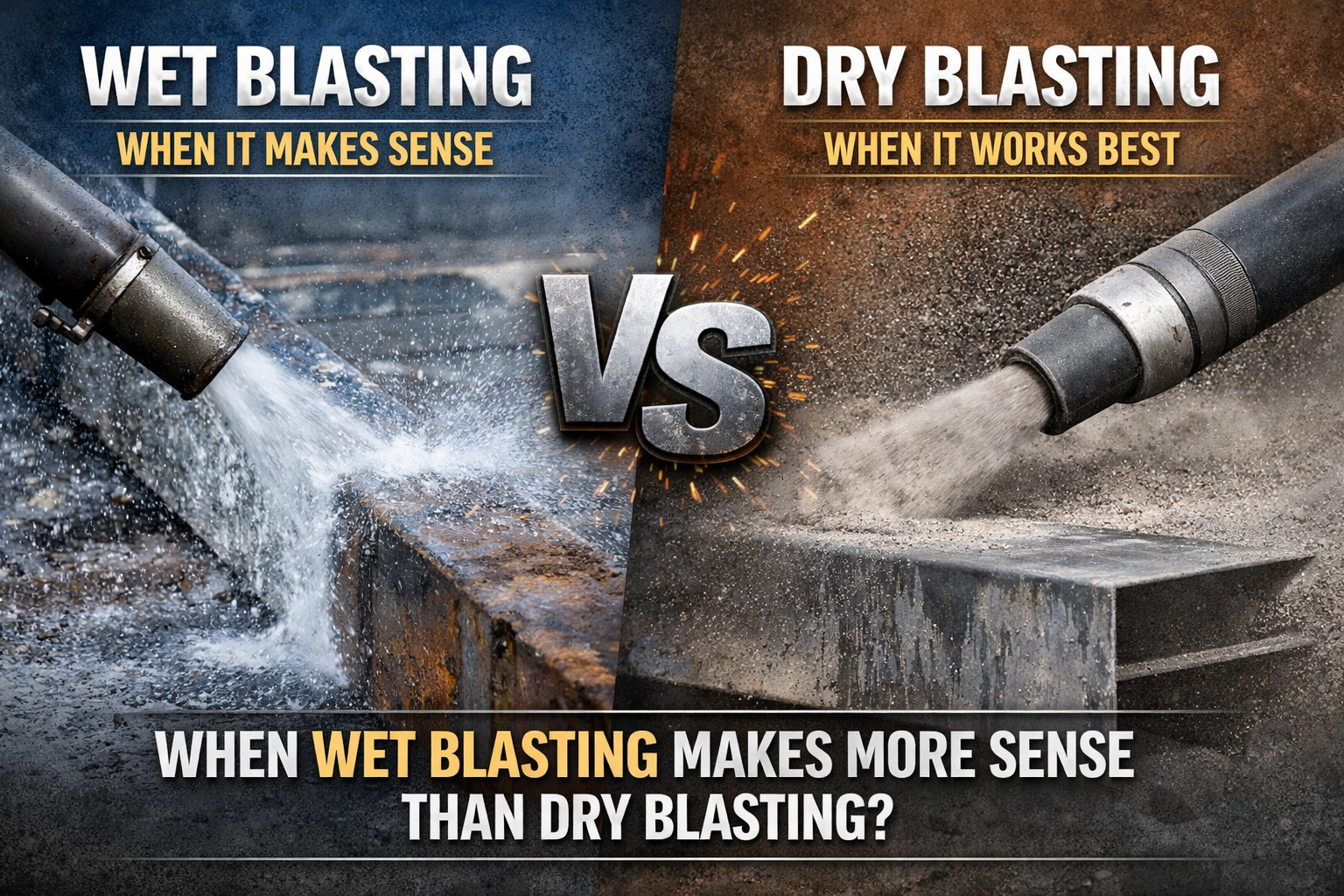
When Wet Blasting Makes More Sense Than Dry Blasting
Wet blasting isn’t better or worse than dry blasting. It’s a situational tool. Learn when wet blasting makes more sense, what problems it solves, and where it creates tradeoffs.
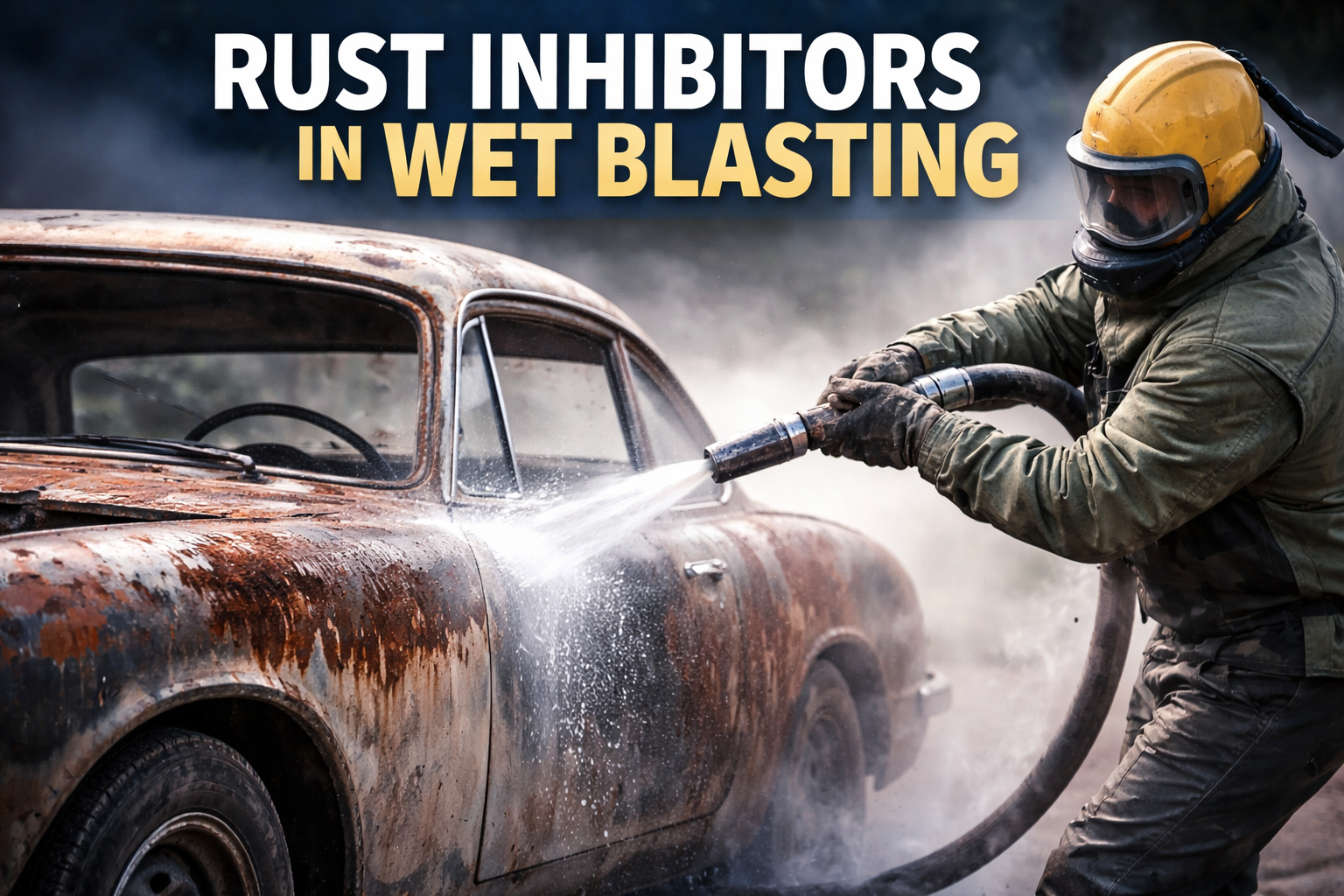
Rust Inhibitors in Wet Blasting: What They Do, What They Don’t, and Where They Fail
Rust inhibitors can slow flash rust after wet blasting, but they don’t stop corrosion. Learn what they do, where they fail, and how professionals use them.
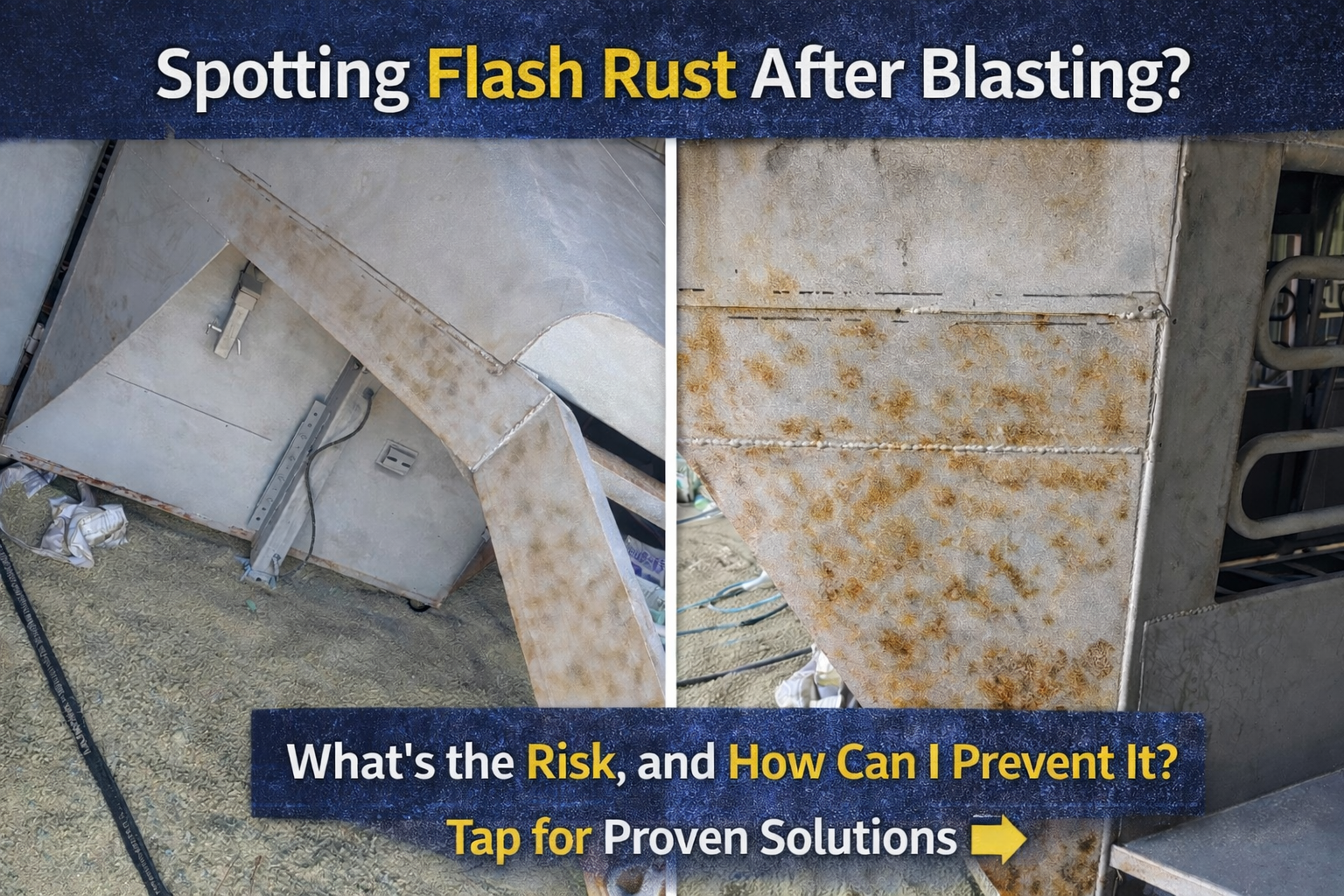
What Causes Flash Rust and How to Prevent It
Flash rust can appear within hours after blasting. Learn what causes it, why it happens so fast, and how to reduce the risk before painting.
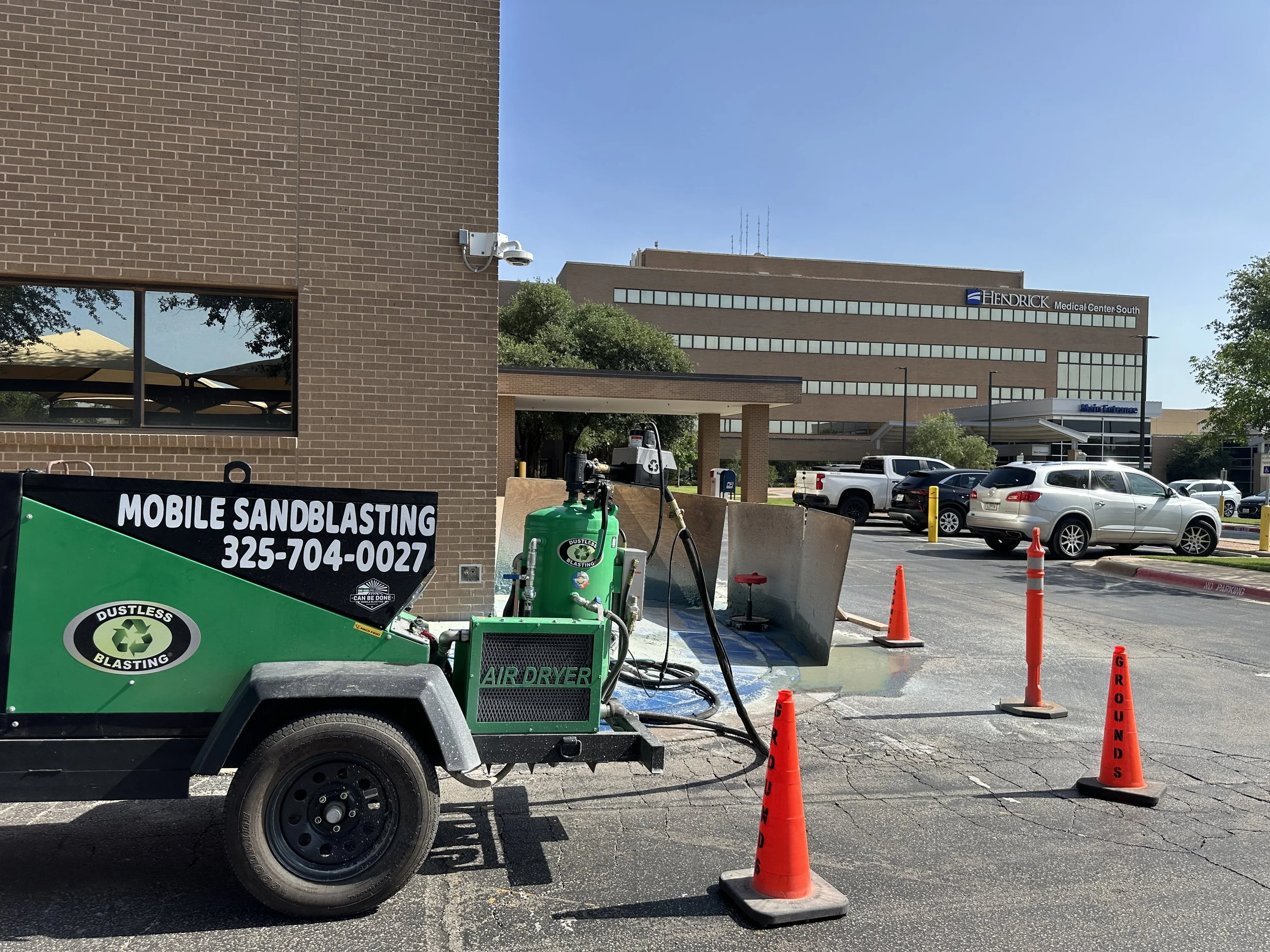
Why “Dustless Blasting” Isn’t Actually Dustless (And When It’s the Right Choice)
Dustless blasting, also called wet blasting, reduces airborne dust, static electricity, and heat. Learn when it makes sense to use it, when it doesn’t, and why dry blasting is still the primary method.